
The LXV Journal · Bordeaux Wine Travel
Bordeaux Wine Country, Beyond the Bottle
For Kunal and me, Bordeaux has never been simply a place to taste great wines. It has become a place of friendships, experiments, long meals, barrels, blending trials and stories we keep bringing home to LXV.
There is a Bordeaux you know from labels: Margaux, Pauillac, Pomerol, Saint-Émilion, Graves and Sauternes. And then there is the Bordeaux you come to know when somebody opens a cellar door, pours a glass, pulls up a chair and asks you to stay for dinner.
The second Bordeaux is the one Kunal and I fell in love with. It is also the Bordeaux wine experience we want to share with the LXV Club.
We have returned not simply to visit famous châteaux, but to learn. One trip leads to a conversation about barrels. Another to blending. Another to Cognac. A tasting becomes dinner. Dinner becomes friendship. And sometimes a friendship becomes a wine.
So rather than give you only a checklist of Bordeaux wineries, I want to tell you about a few of the people and moments that made Saint-Émilion and Bordeaux personal to us — and then show you how we would experience the region together.
If you would rather skip the romance and get straight to the good addresses, jump to Neeta & Kunal's Bordeaux recommendations →
Cooking, Wine & Friendship in Bordeaux with Jean Luc
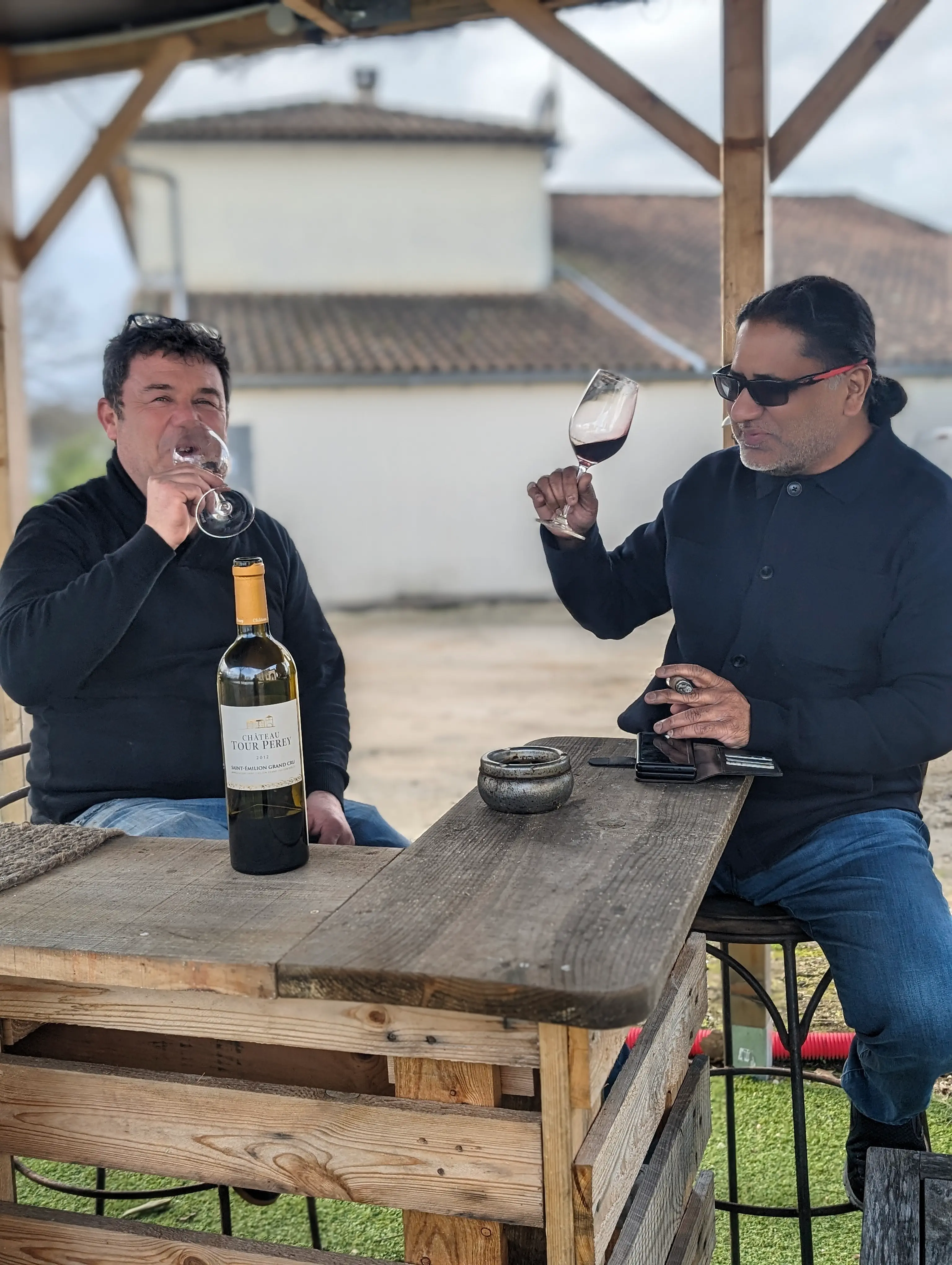
Some of our favorite wine relationships have started in the least complicated way possible: two people, two glasses, and a bottle between them.
Jean Luc became part of our Bordeaux story that way. Conversations about wine inevitably moved beyond tasting notes. We talked about how wine behaves at the table, how food can change what we notice in a glass, and why a bottle is ultimately meant to be shared rather than admired from a distance.
Eventually, we found ourselves doing what we love almost as much as tasting wine: cooking together.
That is when a wine region truly begins to make sense to me. Not in a formal tasting room, but in a kitchen — ingredients on the counter, somebody opening another bottle, everyone tasting as they cook. The winemaker is no longer presenting a wine. He is simply enjoying it with you.
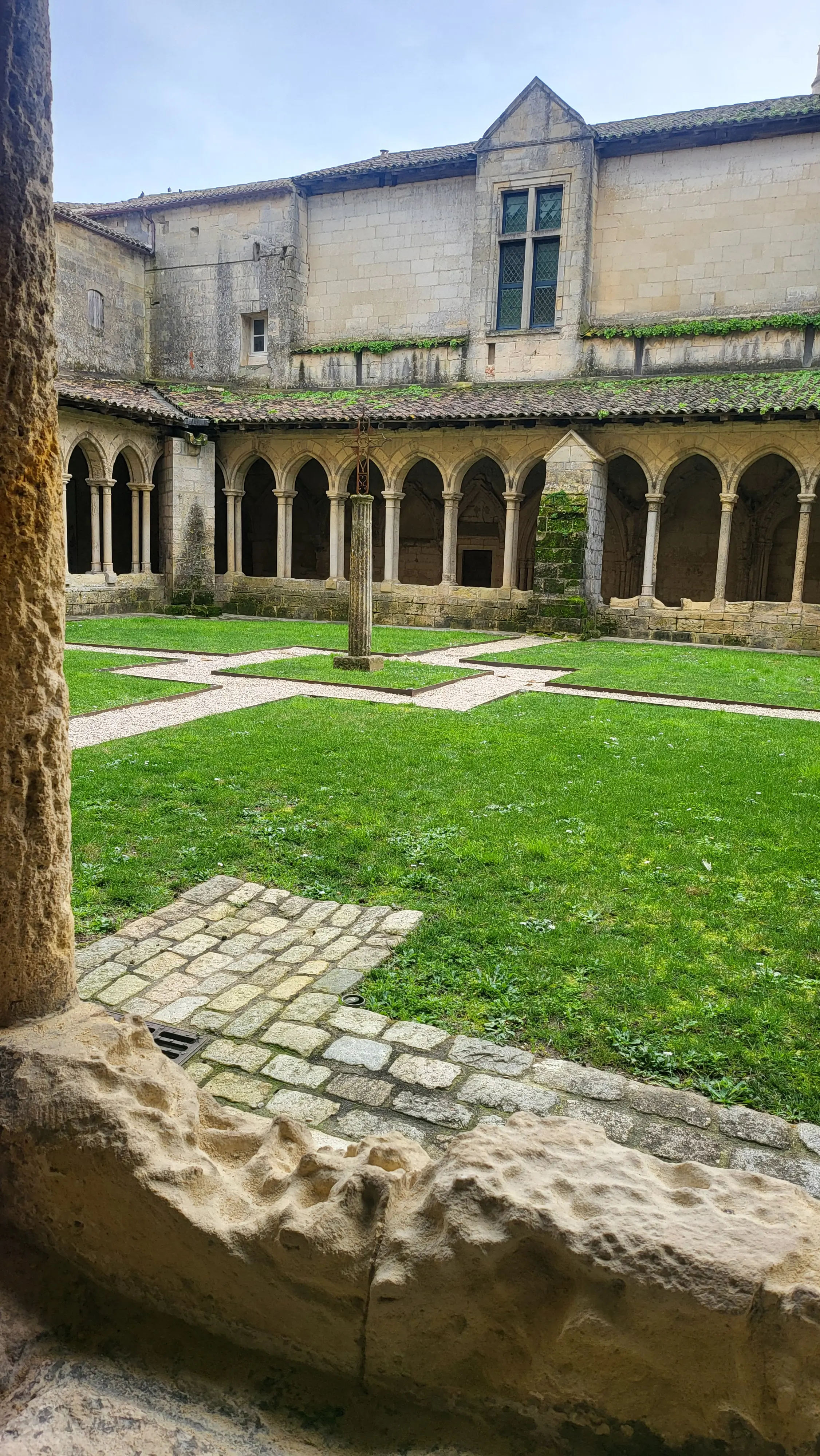
Spend time wandering the medieval town rather than rushing directly from one tasting appointment to another. Have lunch at L'Envers du Décor, explore the Monolithic Church, and give the afternoon permission to unfold slowly.
Inside a Bordeaux Cooperage: Toasting Barrels at Tonnellerie Baron
Visiting a cooperage changes the way you think about oak.
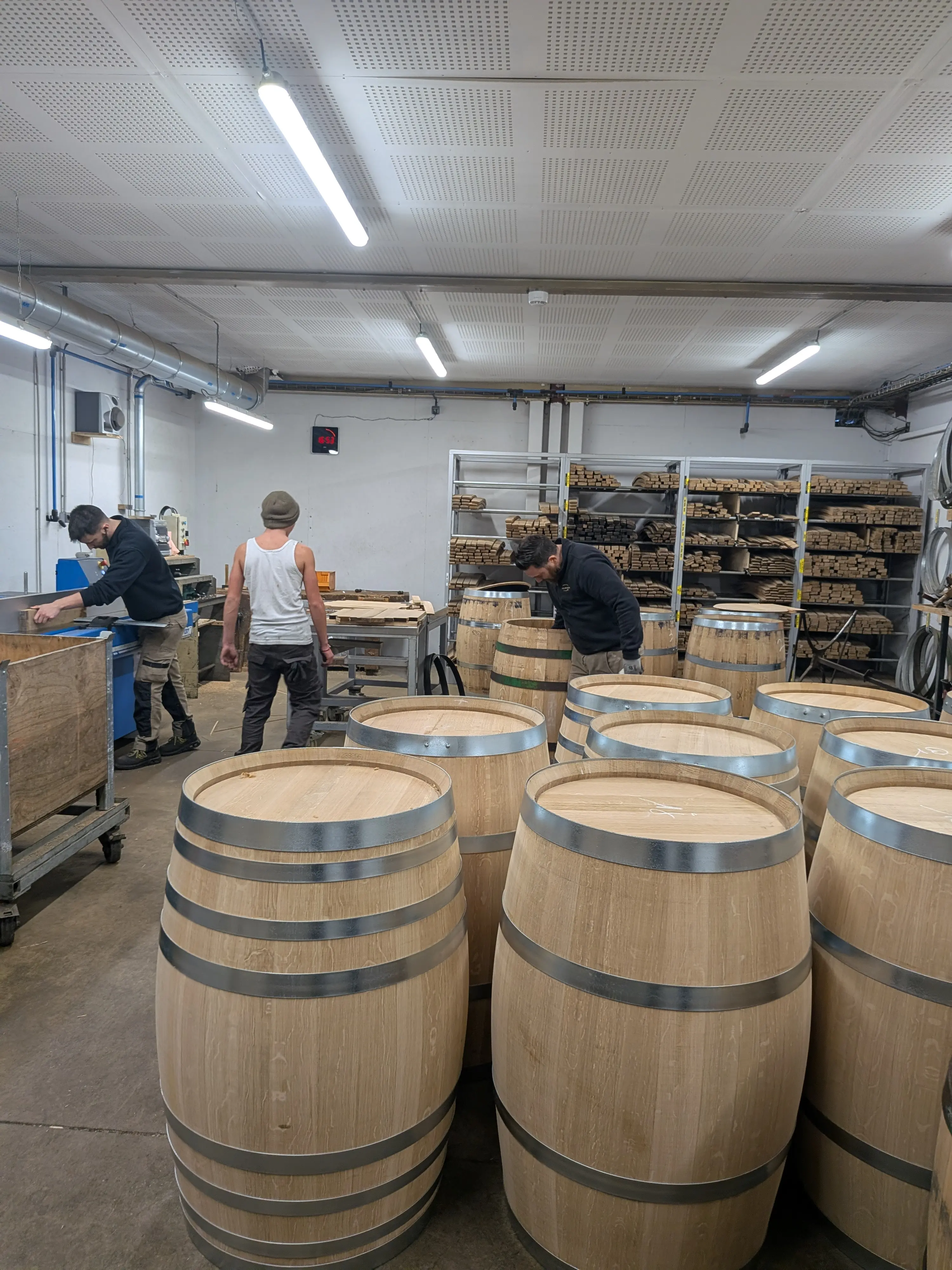
At Tonnellerie Baron, watching barrels being built and toasted made something we discuss constantly as winemakers wonderfully physical. Oak is not simply “new” or “neutral.” Fire, grain, forest, seasoning, toast and the decisions of the cooper all become part of the eventual wine.
Standing among unfinished barrels, you begin thinking about wine in layers. The vineyard gives us the fruit. The cellar guides its evolution. And the vessel quietly participates in the conversation.
These are the experiences Kunal particularly loves: going behind the polished tasting room to understand how something is actually made.
Pair the grandeur of Château Palmer and Château Pontet-Canet with visits such as Château Marquis d'Alesme and Château Haut-Bages Libéral. The joy is in comparing Bordeaux winemaking philosophies, not simply collecting famous names.
From Bordeaux to Cognac: Following the Barrel
Wine has a habit of opening doors into other worlds.
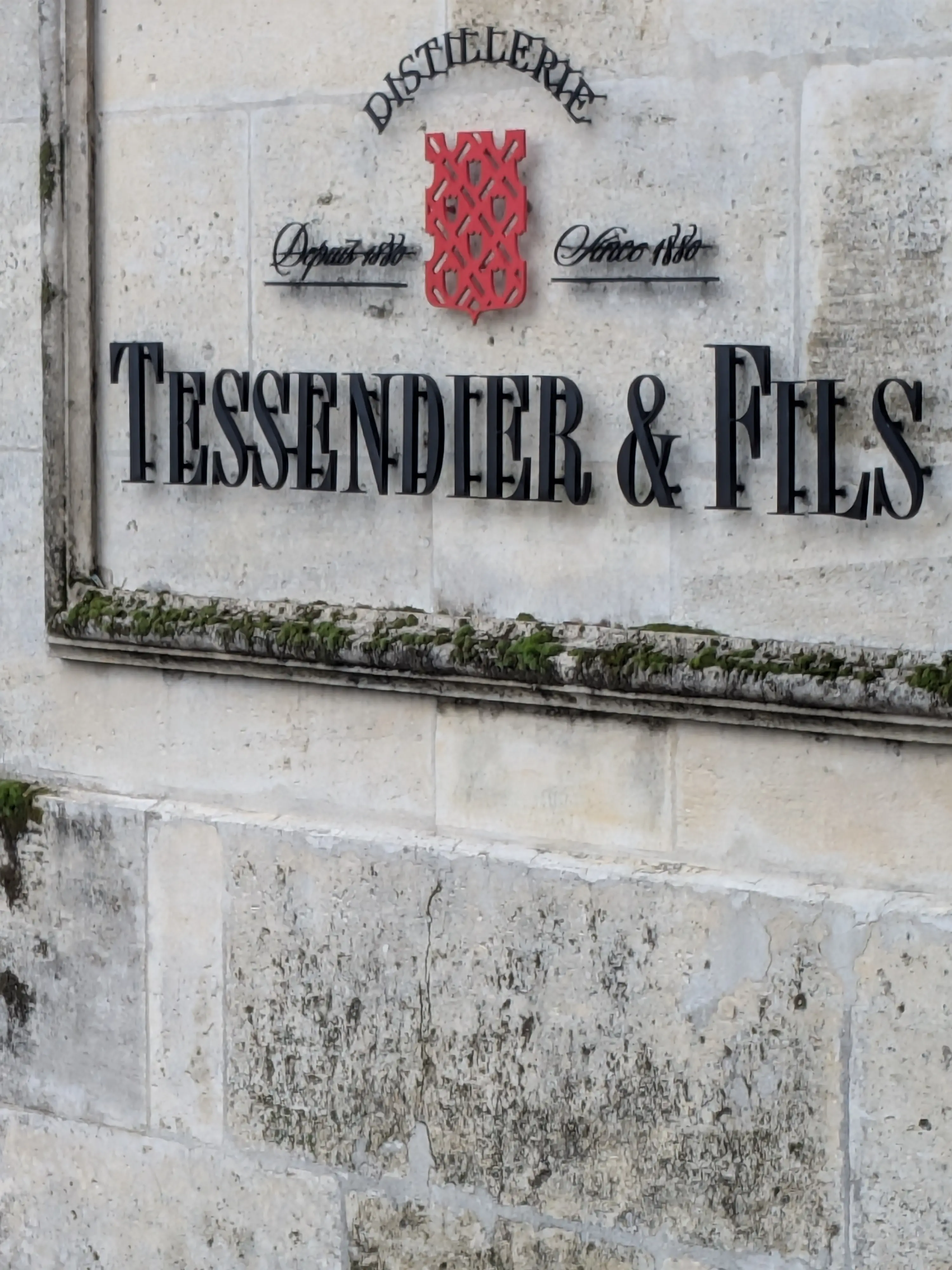
Our conversations around barrels and maturation eventually fed another project and another fascination: Cognac. Suddenly we were thinking about distillation, spirit, extended aging and blending through a different lens.
The details change, but the questions feel familiar. What does time contribute? What does the vessel contribute? When do individual components become something more compelling together?
This is one reason we never think of our visits to France as conventional wine tourism. We go because every trip teaches us something that comes back into the creative life of LXV.
The best wine trips do not simply teach you more about wine. They change the questions you ask when you return home.
Begin with Château Haut-Bailly, continue to Château Smith Haut Lafitte, and then move toward Château Guiraud in Sauternes. Finish slowly — perhaps at Les Sources de Caudalie rather than squeezing in one more Bordeaux tasting.
Château Châtelet & Lionel Kreffe: Our Saint-Émilion Connection
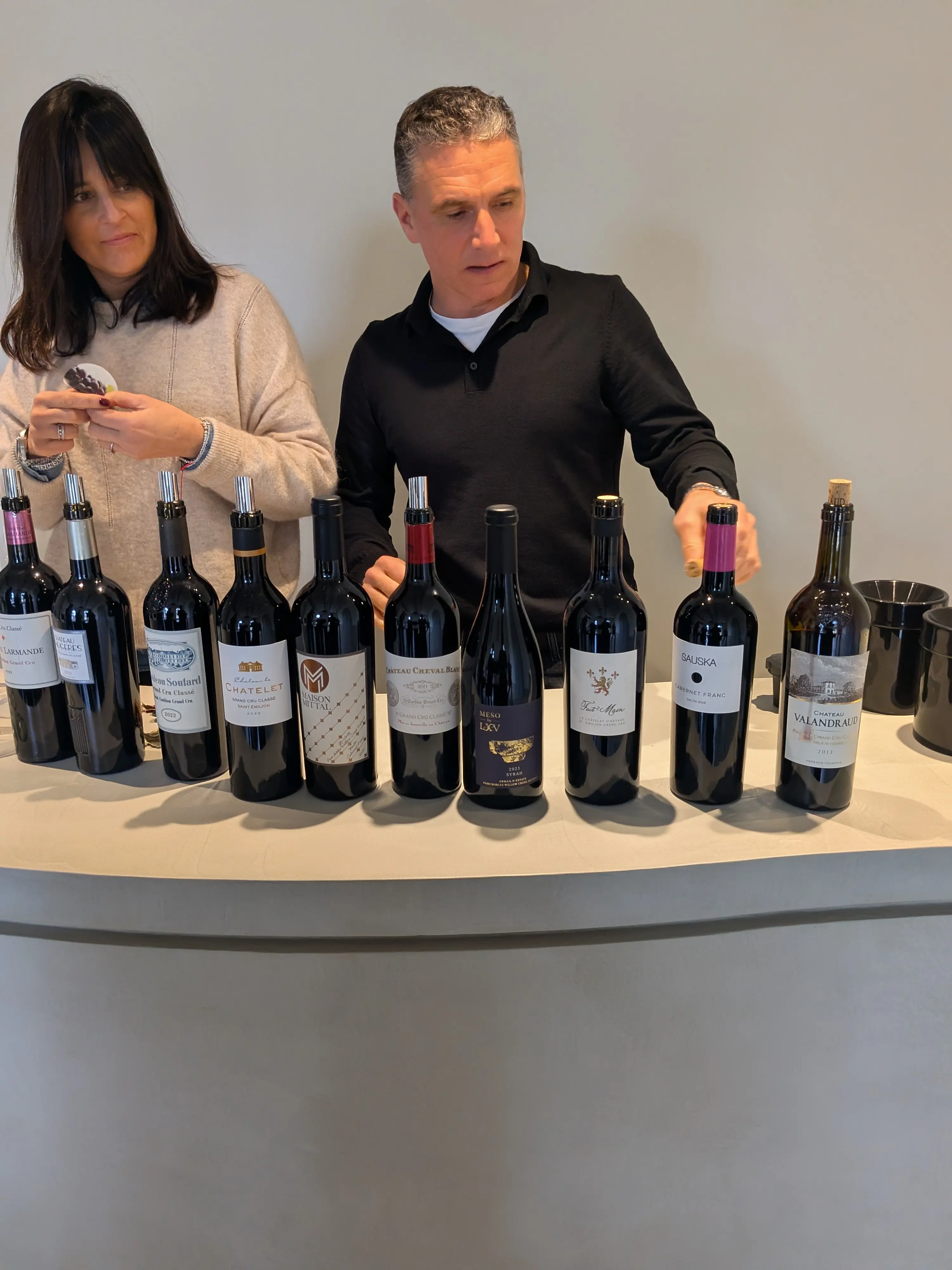
Of all our connections in Bordeaux, Château Châtelet holds a particularly personal place.
Our relationship with Lionel Kreffe grew through repeated tasting and conversation: walking through wines together, comparing components, talking about structure and texture, and asking the question winemakers never seem to tire of asking — what happens if we try this?
This is the part of Bordeaux that can be invisible when you only see the finished bottle. A blend is built through dozens of small judgments. Cabernet Franc may bring one kind of lift. Merlot may reshape the middle. Another component may provide length or restraint. You taste, discuss, adjust and taste again.
Somewhere in that process, Château Châtelet ceased to be merely another estate we admired in Saint-Émilion. It became a partner.
And from that relationship came a beautiful bridge between Bordeaux and Paso Robles: Maison Mittal.
Visit an estate such as Château Fonplégade, wander through Saint-Émilion, enjoy a long lunch, and then come somewhere personally meaningful to us: Château Châtelet. Here we are not simply bringing you to a winery — we are introducing you to friends.
Blending Maison Mittal in Saint-Émilion
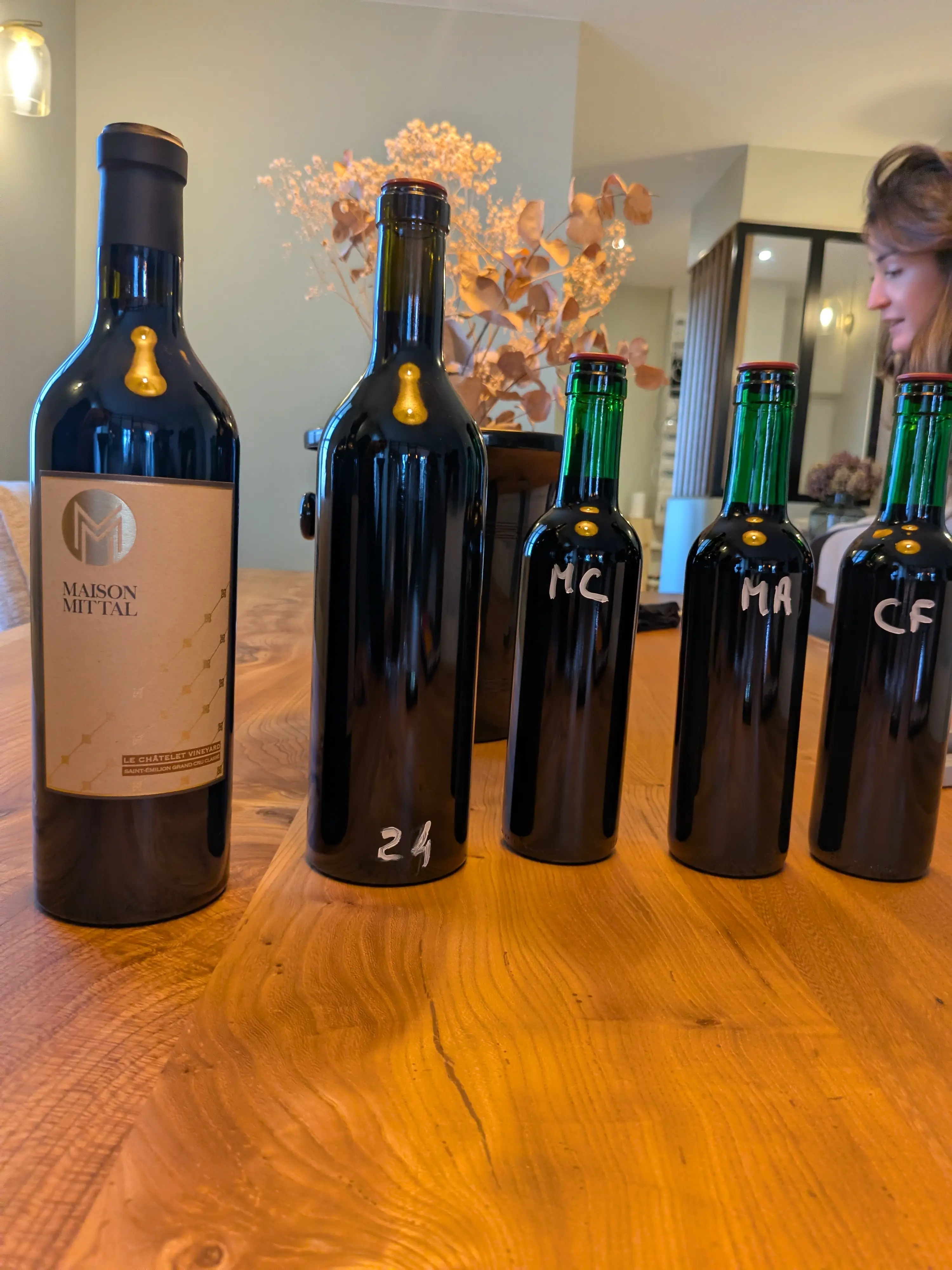
I love this photograph because it shows the part of winemaking nobody puts on a postcard.
No sweeping château. No perfectly arranged tasting flight. Just bottles marked with shorthand, a table, and a lot of tasting.
This is Maison Mittal being worked out in real time.
For Kunal and me, the project is deeply connected to why Bordeaux continues to fascinate us. We are not trying to reproduce Bordeaux in California, nor California in Bordeaux. What interests us is the conversation between places — the discipline of Bordeaux, the generosity we love at LXV, and the relationships that allow something genuinely personal to emerge.
Bordeaux became important to us not because we could visit its most famous cellars, but because eventually we stopped feeling like visitors.
If We Brought You With Us...
We would build the journey the same way we approach wine: with structure, but enough room for surprise. The great Bordeaux châteaux matter. So do a market, a long lunch, a barrel room and an evening when nobody is watching the clock.
Bordeaux City
Arrive, settle in and walk the Garonne. Place de la Bourse, the Water Mirror and perhaps the Cité du Vin. Begin with dinner rather than a tasting marathon.
The Médoc
Marquis d'Alesme, Palmer, Haut-Bages Libéral and Pontet-Canet — a day for understanding Cabernet, gravel and the very different personalities of the Left Bank.
Graves & Sauternes
Haut-Bailly and Smith Haut Lafitte, followed by Château Guiraud. A picnic or relaxed estate lunch keeps the day from becoming too formal.
Our Saint-Émilion
Fonplégade, the medieval village and then Château Châtelet — the day where Bordeaux history meets our own LXV story.
Pomerol & the Icons
La Conseillante followed by Saint-Émilion and Château Figeac, with room for La Dominique or Troplong Mondot if the day feels right.
One Last Morning
Marché des Capucins, coffee, pastries and a leisurely farewell to Bordeaux.
 Our Bordeaux Address Book
Personally Recommended by Neeta & Kunal
Our favorite Bordeaux wineries, restaurants, hotels and experiences
These are the places we would recommend to friends — châteaux we admire, meals worth slowing down for, experiences that have taught us something, and places we would happily return to ourselves.
Bordeaux City · Médoc · Margaux · Pessac-Léognan · Sauternes · Saint-Émilion · Pomerol
Bordeaux City
InterContinental Bordeaux – Le Grand Hôtel
A grand, central base opposite the Grand Théâtre and an easy starting point for exploring Bordeaux on foot.
Visit hotel website →La Cité du Vin
Bordeaux's immersive wine museum. Especially useful at the beginning of a trip for putting Bordeaux into the wider world of wine.
Plan a visit →Place de la Bourse & the Garonne
Walk the riverfront toward the Place de la Bourse and Miroir d'Eau. No appointment, no tasting notes — exactly the right way to arrive in Bordeaux.
Marché des Capucins
A lively food market for cheese, produce, oysters, coffee and a final taste of Bordeaux before heading home.
Médoc & Margaux
Château Palmer
One of the experiences we would prioritize in Margaux. A benchmark estate for understanding elegance, Cabernet and the personality of the appellation.
Explore Château Palmer →Château Marquis d'Alesme
A beautiful counterpoint to the larger Médoc icons and well worth including in a Margaux day.
Château Haut-Bages Libéral
A useful stop for seeing another interpretation of Pauillac terroir and contemporary vineyard thinking.
Château Pontet-Canet
Fascinating for visitors interested in viticulture, biodynamics and how farming philosophy reaches the glass.
Pessac-Léognan, Graves & Sauternes
Château Haut-Bailly
Elegant wines, old vines and a striking contemporary cellar make this one of our strongest Pessac-Léognan recommendations.
Explore Château Haut-Bailly →Château Smith Haut Lafitte
An excellent estate to combine with a relaxed lunch and deeper exploration of Pessac-Léognan.
Visit Smith Haut Lafitte →Château Guiraud
A terrific introduction to Sauternes, biodiversity and the relationship between Sémillon and Sauvignon Blanc.
Visit Château Guiraud →Les Sources de Caudalie
The place to stop trying to fit in one more château. Stay, eat, visit the spa and let the day finish properly.
Visit Les Sources de Caudalie →Saint-Émilion
Saint-Émilion Old Town
Do not schedule every minute. Walk the cobbled streets, explore the Monolithic Church, browse wine merchants and stop whenever somewhere looks inviting.
L'Envers du Décor
A Saint-Émilion classic and historic wine bar serving market-driven food in the center of the village.
Visit L'Envers du Décor →Château Châtelet
This one is different. Château Châtelet and Lionel Kreffe are part of our own Saint-Émilion story and the relationship behind Maison Mittal.
Château Fonplégade
A beautiful Saint-Émilion estate to place before some free time in the village and a more personal afternoon.
Château La Dominique
Wine and contemporary architecture make this an especially visual Saint-Émilion stop.
Visit Château La Dominique →Château Troplong Mondot
One of the best choices if you want a deeper, longer Saint-Émilion visit rather than a quick tasting.
Explore Troplong Mondot →Pomerol & Saint-Émilion's Great Estates
Château La Conseillante
A chance to experience the intimacy of Pomerol, where vineyard scale is often smaller and the wines can feel remarkably precise and distinctive.
Explore La Conseillante →Château Figeac
One of the great Saint-Émilion names and particularly interesting for visitors who enjoy Cabernet-driven Right Bank wines.
Explore Château Figeac →Do not visit six châteaux in one day. Bordeaux is much better when there is time for lunch, a wrong turn, a second glass and a conversation you did not schedule.
Planning a Bordeaux Wine Trip
How many days do you need in Bordeaux wine country?
Five to six days gives you enough time to experience Bordeaux city, the Médoc, Pessac-Léognan, Sauternes, Saint-Émilion and Pomerol without turning the trip into a race between tasting rooms.
Should you stay in Bordeaux or Saint-Émilion?
Bordeaux city makes an excellent central base if you want restaurants, nightlife and access to multiple wine regions. Saint-Émilion is ideal for a quieter, more immersive Right Bank experience.
Which Bordeaux wine regions should first-time visitors see?
For a first visit, we would include the Médoc for Cabernet and Left Bank history, Saint-Émilion and Pomerol for the Right Bank, Pessac-Léognan for Graves terroir, and Sauternes for a completely different expression of Bordeaux wine.
Do Bordeaux châteaux require appointments?
Many leading Bordeaux estates receive visitors by advance reservation rather than casual walk-in tasting. Plan key château visits ahead, but leave open time between them.
How many winery visits should you schedule in one day?
Two to three meaningful visits is usually enough. Bordeaux becomes far more enjoyable when you still have time for lunch, villages and spontaneous discoveries.
Planning a Bordeaux wine trip: your questions
When is the best time to visit Bordeaux wine country?
Late September for harvest, when the châteaux are alive and the light is golden, or May and June when the vines are green and the tasting rooms are quiet. We go in both. August is hot, and many of the small châteaux close for the holidays.
How many days do you need in Bordeaux?
Four to five. One for the city, one for the Médoc, one for Saint-Émilion and Pomerol, one for Graves and Sauternes, and a last morning for the market. Two days gives you Saint-Émilion and the city and nothing else, which is still a good two days.
Saint-Émilion or the Médoc: which is better for a first visit?
Saint-Émilion. It is a walkable medieval village with the vineyards at the edge of town and tastings you can book a week out. The Médoc is grander and more spread out, and its first-growth châteaux want an appointment well in advance. Do Saint-Émilion first and the Médoc once you have the bug.
What is Maison Mittal?
Our Saint-Émilion label. Kunal and I blend it with Lionel Kreffe at Château Châtelet from fruit grown on the right bank, and bring it home to Paso Robles. It is the Bordeaux half of a house built on Cabernet Franc. When you are back in California, come taste it with us in Paso Robles.
There are many ways to visit Bordeaux. You can build a trip around classifications and famous labels and have an extraordinary time.
But the Bordeaux Kunal and I want to share is more personal. We want you to understand why we became fascinated by a particular barrel. We want you to taste with the people who have become our friends. We want you to sit around the table, wander through Saint-Émilion and experience the moment when wine stops being a subject and simply becomes part of the conversation.
At LXV, we often speak about Atithi Devo Bhava — the divine visits us as a guest. Hospitality, for us, means much more than opening a bottle. It is opening a world and inviting someone into it.
Bordeaux has opened that world to us many times. Now we would love to open it for you.
— Neeta
Keep Reading
2019 LXV Reserve Syrah – Paso Robles Syrah with a Central Coast Twist
Central Coast Syrah is having its moment. Our 2019 Reserve Syrah from White Hawk Vineyard is part of the reason.
Love Letter to Syrah
Syrah began near Shiraz, found a home in the Rhône, and then found us.
The Night I Learned Chicken Fried Steak Is Not Chicken
The recipe said four beef cutlets. Naturally, I panicked.