
Paso Robles Wine Guides
Indian-American Owned Wineries in California: The Complete List
There is no published list of Indian-American owned wineries in California. We went looking for one, could not find it, and so we wrote it. Eleven founders, from a Houston cardiologist with a Napa Cabernet estate to a natural-wine label made in a Los Angeles warehouse — where they are, what they make, and which of them you can actually visit.
By Neeta & Kunal Mittal · LXV Wine, 1306-B Pine St, downtown Paso Robles · Published August 2026
Why this list did not exist
California has published roundups of Black-owned wineries, Latino-owned wineries and Indigenous-owned wineries. It has not, as far as we can tell, published one of Indian-owned wineries. The closest thing is a 2022 American Kahani feature on Indian-American women in wine, which covers six people and stops there.
Part of the reason is that the group is small and scattered. There is no Napa cluster, no association, no trade group. The founders below are in Sebastopol, St. Helena, Morgan Hill, Temecula, Cambria, Los Angeles and Paso Robles, and most of them have never met. Part of it is that many of them are new. Four of the eleven launched their brands after 2015.
And part of it is that “Indian-American winery” is not a style. There is no through-line in the glass. Dr. Revana makes a classical Napa Cabernet. Rajat Parr makes some of the most severe, low-alcohol Chardonnay in the state. Anish Patel makes skin-contact orange wine in a warehouse. What they have in common is a country of origin and, in most cases, a first-generation story about arriving somewhere and deciding to farm.
We are one of them, so treat this as a list written from inside rather than from above. We have tried to be accurate rather than flattering, and we have put ourselves in the middle of the list rather than the top of it.
Indian-American owned wineries with a tasting room you can visit
Copia Vineyards and Winery: Paso Robles
Founders: Anita Sahi (owner and general manager) and Varinder Sahi (winemaker). Where: 5076 Mustard Creek Road, Paso Robles, in the Willow Creek District, about ten minutes west of downtown. Visiting: by reservation only.
Anita Sahi came to wine from New York fine dining, where she owned a restaurant in Park Slope. She worked the 2016 harvest at Booker before founding Copia, and the restaurant background shows: the tasting is built around culinary provisions, and the pairings run to turmeric panna cotta and beet tahini rather than a cheese plate. They make Rhône-style blends alongside Cabernet Sauvignon, from roughly twenty acres planted in 2019. Like us, they were named to a USA Today top-ten list of tasting rooms. That puts two Indian-American-owned wineries in a national top ten, which we find quietly satisfying.
Naidu Wines: Sebastopol, Russian River Valley
Founder: Raghni Naidu. Where: Blucher Valley Road, Sebastopol. Visiting: by appointment; there is a guesthouse on the estate.
Raghni Naidu is widely reported as the first Indian-immigrant woman to launch a wine brand in the United States. She was born and raised in Amritsar, emigrated to Melbourne at eighteen, and launched the label in 2021, in the middle of the pandemic, and reached profitability anyway. The wines are estate Pinot Noir, Chardonnay, Rosé, Cabernet Franc and Viognier, at around 250 cases to start. The 2022 Pinot Noir took 95 points from Wine Enthusiast, and the wine has poured at SingleThread, which holds three Michelin stars. If you are building a Sonoma day around this list, this is the stop.
Alara Cellars: Morgan Hill, Santa Clara Valley
Founder: Janu Goelz, owner and winemaker. Where: 90 E 3rd Street, downtown Morgan Hill. Visiting: walk-in tasting room.
Janu Goelz was a television weather forecaster in the Bay Area, acted in an Indian romantic comedy, and founded a clothing line made from recycled saris before she made wine. Her first vintage was 2016 and the tasting room opened in 2017. The labels are fashion illustrations — a dress whose imagery changes with each vintage, drawn from that wine’s aromas — which is the most literal translation of a wine into a garment we have seen. Chardonnay, Pinot Noir, Barbera, Sangiovese, Negrette, Cabernet Pfeffer, Grenache Blanc, around 2,000 cases. Her 2017 Grenache Blanc won Best of Show at the Central Coast competition, the first wine she ever entered anywhere.
Akash Winery & Vineyards: Temecula Valley
Founders: Akash Patel, with his parents Ray and Nalini Patel. Where: 39730 Calle Contento, Temecula. Visiting: open tasting room, with a patio and fireplace.
Ray and Nalini Patel are of Indian descent but arrived in the United States as refugees expelled from Uganda and Kenya in the 1970s. They built a boutique hotel business first. Ray kept a framed photograph of Temecula vineyards on his mantel for years, calling it the dream, then in 2010 bought twenty acres of raw weeds with no utilities on it. The winemaker came in 2014; the tasting room opened in 2019. They make Cabernet Sauvignon and rosés, and have since added a brewery. Akash Patel is unusually direct about why the room looks the way it does: “Sometimes we go to other wineries and we don’t feel that” — meaning welcome. It is the only winery on this list that names hospitality toward South Asian guests as an explicit design goal.
LXV Wine: downtown Paso Robles
Founders: Neeta and Kunal Mittal. Where: 1306-B Pine Street, downtown Paso Robles; estate vineyard Armaa.N in the Willow Creek District. Visiting: open Monday and Wednesday to Sunday, 10am–5pm, closed Tuesdays; reservations recommended.
Ours. First vintage 2010, around 2,000 cases, Bordeaux-inspired reds with a house specialty in Cabernet Franc. Every wine is poured twice — once alone, once against a hand-blended spice — which is a technique Neeta developed from her mother’s tandoori masala, bought loose in Mumbai markets. It is not about heat. It is about how an aromatic compound reorganises what you taste, and it works on people who think they do not like the wine in front of them. USA Today named it one of the top tasting experiences in America; Neeta and Kunal were named to Wine Enthusiast‘s Future 40 in 2025.
Indian-American owned wineries by appointment or allocation
Revana Family Vineyard and Sitar Wines: St. Helena, Napa Valley
Founder: Dr. Madaiah Revana. Where: 2930 St. Helena Highway North, St. Helena. Visiting: by appointment — call ahead.
The longest-established name on this list by two decades. Dr. Revana is a practising cardiologist in Houston who planted the St. Helena vineyard in 1997 and opened the winery in 2004. He was born in a village near Bangalore and raised on a multi-generational family farm, which is the lineage he cites for the viticulture rather than anything he learned in Napa. The 2007 Revana Estate Cabernet was named the fourth-best wine in the world by Wine Spectator. His second label, Sitar Wines, is a 300-case Pinot Noir sold in wooden collector’s boxes and named, unmistakably, for home. He also owns estates in Oregon and Argentina.
Patel Napa Valley: Coombsville, Napa Valley
Founder: Raj Patel. Visiting: by appointment; also poured at Vintner’s Collective in Napa.
Raj Patel emigrated from India at six, studied at UC Davis, interned in the Robert Mondavi lab and built a finance career at Bank of America alongside the winery. First commercial vintage 2007, capped at about a thousand cases of Bordeaux varieties. The story we like best about him: when Vintner’s Collective blind-tasted his debut wine for possible representation, he insisted on sitting in the room and listening to the criticism, then went back and overhauled the wine. Robert Parker gave the reworked 2007 Cabernet 95 points. He still declassifies large portions of production that do not meet the mark, and his wine has been poured at a US State Dinner.
Rajat Parr: Sandhi, Domaine de la Côte, Phelan Farm, Brij, Scythian
Founder: Rajat Parr, born and raised in Calcutta. Where: Sta. Rita Hills, the San Luis Obispo Coast, and the Cucamonga Valley.
The best-known Indian name in American wine, and the hardest to summarise, because he is now attached to six or seven labels. Sandhi and Domaine de la Côte are Sta. Rita Hills Chardonnay and Pinot Noir. Phelan Farm, in Cambria on the SLO Coast, is eleven and a half acres he grafted over from 2017 to Trousseau, Gamay, Mencia, Savagnin, Poulsard and Jacquère — a Jura-and-Savoie planting on the California coast, farmed regeneratively with livestock and bottled by gravity with no pumps. Scythian, with Abe Schoener, works old Cucamonga Valley vines in Southern California, harvesting in August while Phelan harvests in October. His négociant label Brij is named after his father. He describes himself now as a farmer rather than a sommelier, which from the man who wrote the book on somm training is quite a sentence.
Tasting-room access varies by label and season — check each brand directly before driving.
Tinto Amorío: Los Angeles
Founder: Anish Patel. Visiting: no tasting room; direct and selective retail.
An urban natural-wine producer making semi-carbonic reds and skin-contact orange wines, and by its own account the only South-Asian-owned natural wine brand in the country. The cuvée names include Bheeyo, a South Asian word. Patel founded it after recovering from a serious car accident; the labels are original in-house artwork with hand-dipped wax, five per cent of proceeds go to local food banks, and the brand was early to voluntary allergen disclosure on the label. If you want the least conventional wine on this list, this is it.
Indian-American leadership at wineries they do not solely own
Lynmar Estate: Sebastopol, Russian River Valley
Proprietor: Anisya Fritz, with her husband Lynn Fritz. Where: 3909 Frei Road, Sebastopol.
Anisya Fritz came from India to the United States for college at seventeen, took a BA, an MA and a PhD in business strategy, and was a business-school professor at twenty-five. She co-founded a humanitarian logistics nonprofit in 1996 and joined Lynmar’s operations in 2008. She built the customer-facing team that now drives roughly 95 per cent of the estate’s sales, and teaches wine-industry entrepreneurship at Sonoma State. Pinot Noir and Chardonnay, in a garden setting that is one of the more pleasant places to sit in Sonoma.
Priyanka Dhar French: winemaker, Signorello Estate, Napa Valley
Not an owner, but she belongs on any honest version of this list. Priyanka Dhar French was the first Indian graduate of the UC Davis master’s programme in viticulture and enology, in 2009, and is widely described as Napa’s first Indian female winemaker. Her path to wine started with a college field trip to Sula Vineyards in Nashik. She was cellarmaster and enologist at Dalla Valle from 2014 to 2019 and has been head winemaker at Signorello since, leading the rebuild after the 2017 Atlas fire destroyed the winery.
What we could not find
Two gaps are worth stating plainly, because a list is only useful if it is honest about its edges.
The Central Valley. Punjabi Sikh families farm a great deal of California wine grapes around Fresno, Madera, Kerman, Selma and Lodi. We could not find a single one of those families operating a wine brand or a tasting room under their own name. That is almost certainly a failure of the public record rather than a fact about the world — these are growers, and growers do not get written about. If you know of one, we would like to hear from you and we will add them.
Everywhere else. Outside California, Reddy Vineyards in the Texas High Plains is Indian-owned and significant. And there is a real cohort of Indian-owned wineries in British Columbia’s Okanagan Valley — Kismet Estate among them — large enough that it deserves its own article, which nobody has written either.
Visiting more than one of them
If you want to make a trip of it, the geography is unhelpful but not impossible. Two of the eleven — ours and Copia — are in Paso Robles, twenty minutes apart, and can be done in an afternoon. Naidu and Lynmar are both in Sebastopol, six miles from each other. Revana and Patel are both in Napa. Alara is in Morgan Hill on the drive between the Bay Area and the Central Coast; Akash is in Temecula, three hundred miles south of everything else on this page.
The sensible version is Sonoma for a day, Napa for a day, and Paso Robles for a weekend, with Morgan Hill as the stop on the way down. If you are doing the Paso leg, our hour-by-hour downtown itinerary covers the logistics.
A note on why any of this matters
We are ambivalent about identity as a marketing category. Nobody should buy a bottle because of where the owner’s parents were born, and we would rather be judged on the Cabernet Franc.
But the list is worth having for a different reason. Every founder above describes some version of the same moment — arriving in a room where nobody looked like them and deciding to stay anyway. Dr. Revana in 1997 had no one to call. Raghni Naidu in 2021 had barely more. If this page means the next person can see that there are eleven of them and counting, it has done its job, and the wine can be argued about separately.
Corrections and additions welcome. We maintain this page by hand. If we have missed a winery, got a founding year wrong, or listed a tasting room that has since changed its format, email [email protected] and we will correct it.
Keep Reading
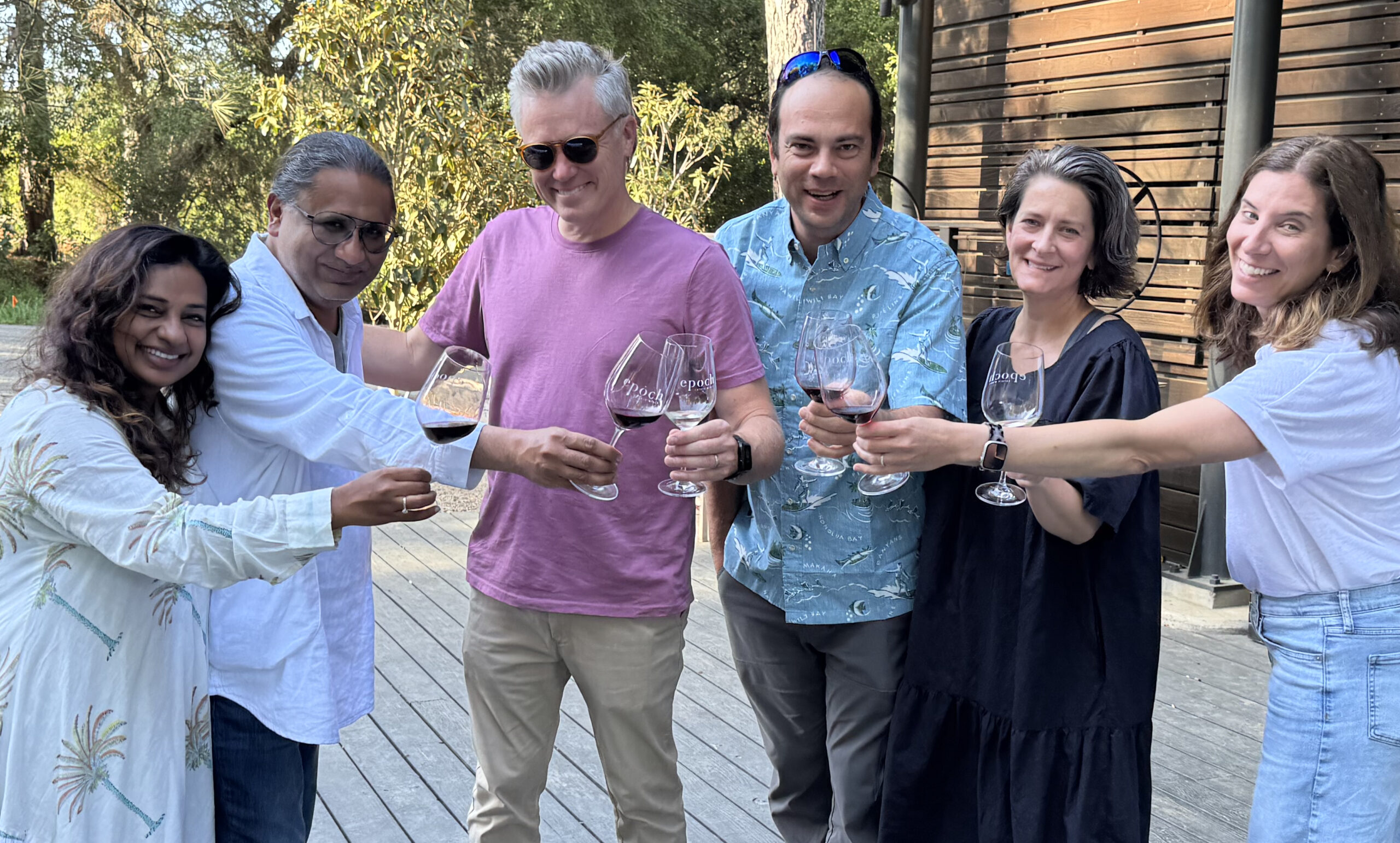
Paso Robles Wineries for Small Groups
Which Paso Robles wineries take which group size, what they charge, which have private rooms with published capacities, and which accept limos…
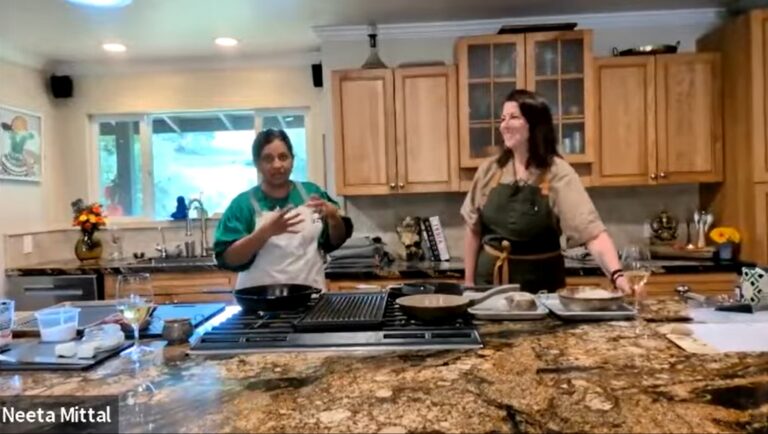
A Paso Robles Winemaker’s Guide to Wine & Food Pairing
White with fish, red with meat. Those rules are useful the way a map is useful.
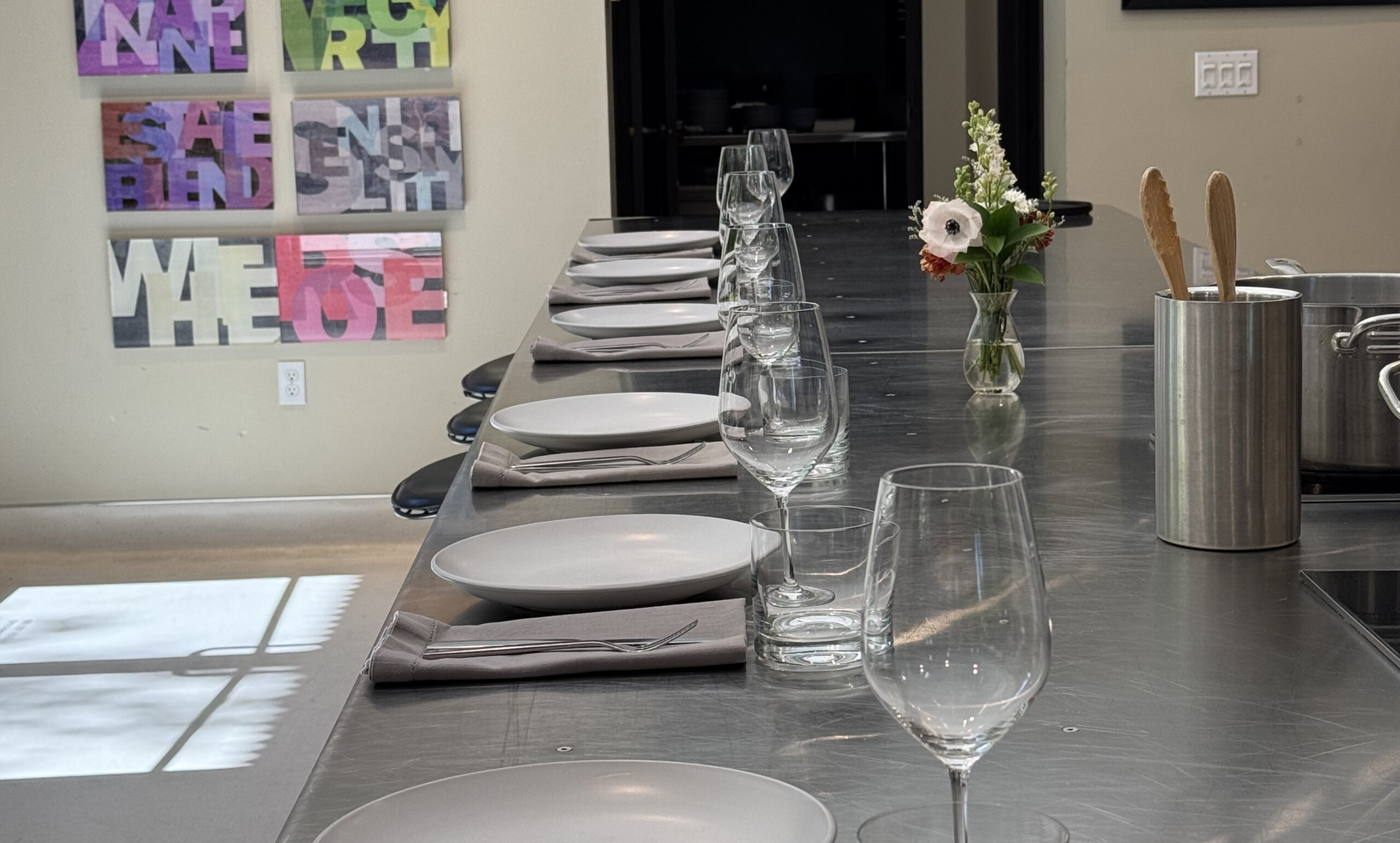
Seated, Guided Wine Tastings in Paso Robles
Eighteen seated, host-led Paso Robles tastings compared — price, duration, party-size cap and reservation policy, read from each winery's own site in…