
Stress in the Vineyard: Listening to the Vines
Stress in the Vineyard: Listening to the Vines
By Jeff Strekas
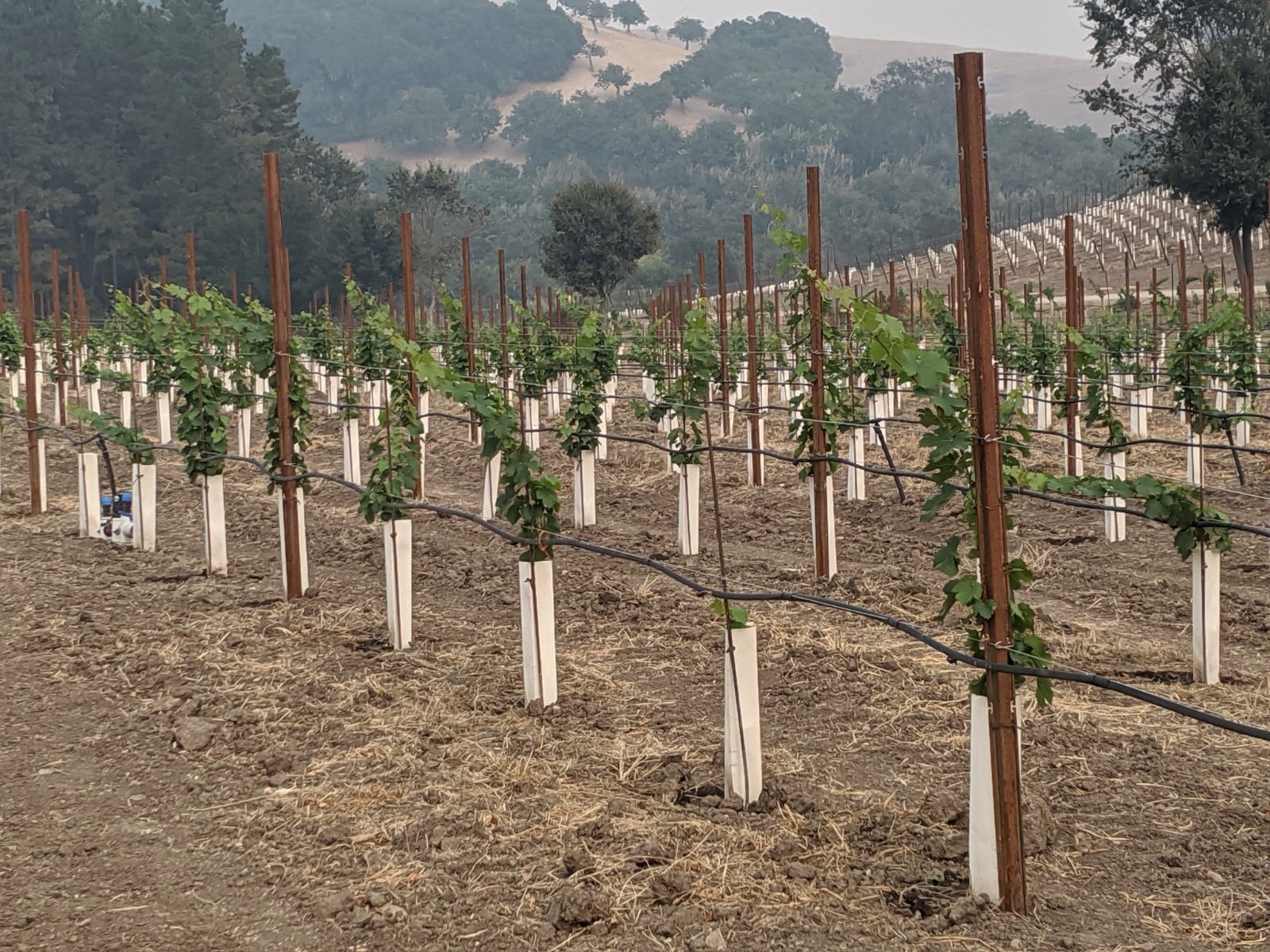
Young vines taking root at Armaa.N Estate.
One frequently discussed topic in the world of wine that I have always found very interesting is that of stress in the vineyard. I have read many blogs and articles where growers and proprietors repeatedly lean into the idea of stressing vines in order to get them to produce the best possible tasting fruit. And, in a vacuum, that is not an unreasonable idea. It certainly resonates with most of us that any organism that is overfed, oversheltered, or never allowed to go through a normal amount of struggle might not end up being the most robust organism in the future.
But I think the way that idea is often presented tends to make us anthropomorphize the vines and make them a bit too human… an idea that is fun, but not entirely scientifically sound. What do those personifications of grapevines end up becoming? Does an 80-year-old, dry-farmed, gnarly head vine that has struggled for water every day of its life resemble Conan the Barbarian a bit? I can see it. Does a vine that has struggled growing on a high-elevation, steep cliffside have the resilience and altitude tolerance of a Nepalese Sherpa? Sounds plausible. But what does stress really do?
How much stress is enough?
Stress is an important component of vine growth, both in an environmental way (very high heat being a great example for the Paso Robles AVA) and in an internal biological sense (inducing the right amount of water stress is thought to be one of the factors that drives the onset of veraison). But what is the right level of stress? Is more stress better? Is the best way to achieve a desirably high level of phenolics in our grapes to stress the vines as much as possible? Or is it better to apply small amounts of stress at the right time, or even to just encourage the vines to grow in a normal cycle on land that already induces a healthy amount of stress?
One thing we often forget in talking about these matters is to consider whether the situations we are comparing are really valid, apples-to-apples comparisons. If someone growing grapes in a vineyard with ten feet of volcanic topsoil says that they need to use a large quadrilateral trellis type to counteract the vigor, it’s probably not a valid comparison to say we should do the same thing on a steep, limestone-covered hillside in Paso Robles with little to no topsoil.
Similarly, if someone is growing vines in a clay-based soil near a creek and says that they never need to water them after the winter rains each year, does that mean we should apply the same line of thinking to growing vines in a sandy, well-drained soil that regularly sees hundred-degree temperatures in the summer?
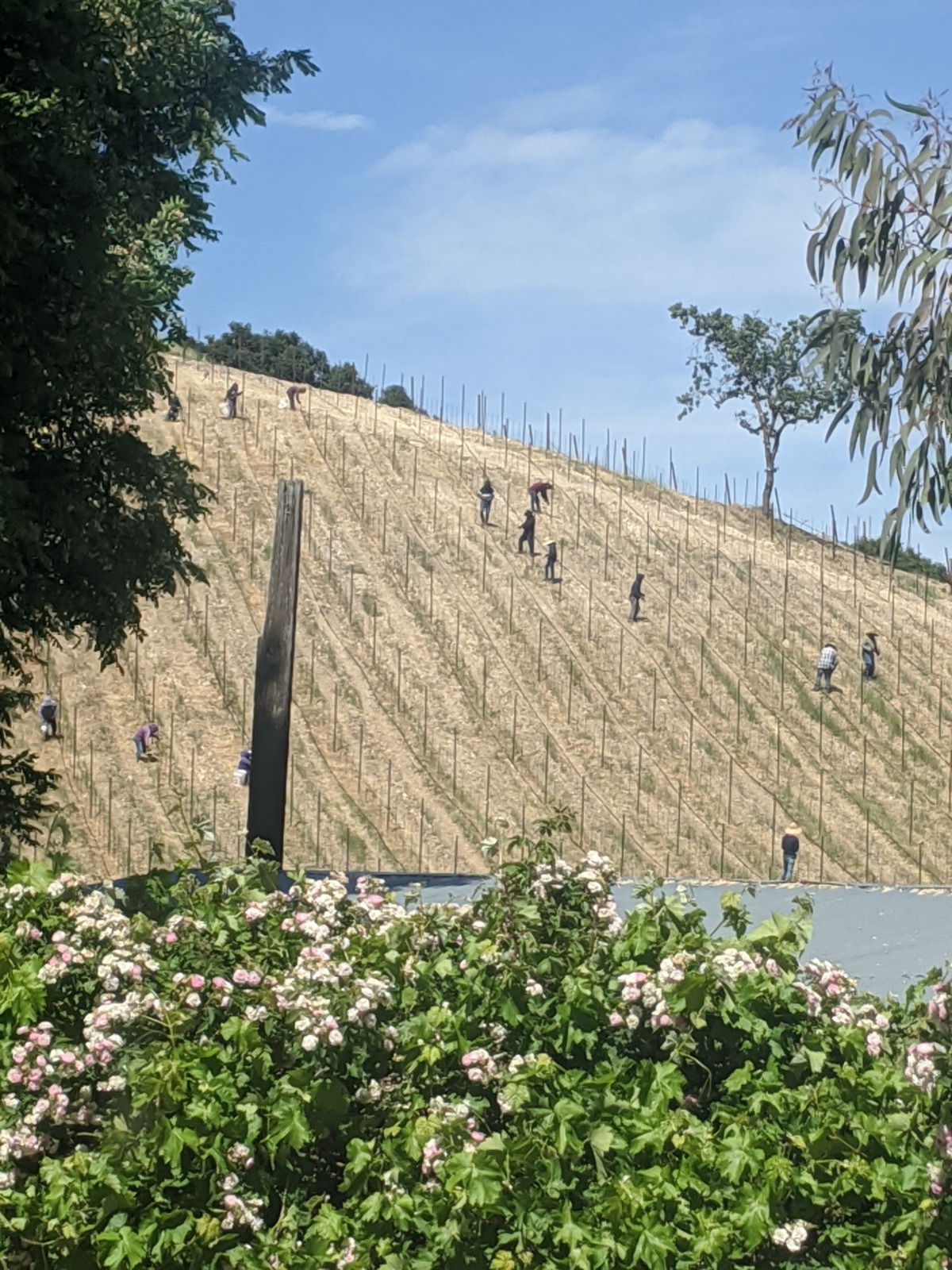
Establishing the vineyard, one stake at a time.
Paying attention at Armaa.N
This is why our philosophy at LXV is rooted (pun intended) in paying regular attention to our vines. Only by seeing what they experience, feeling the conditions that they feel, and understanding the land and weather around them can we really decide how best to tend them.
In planning out Armaa.N Vineyard, we took specific care to match predicted stresses with the vines to be planted. Cabernet Franc was planted in the lowest-elevation, valley-floor section because it would be the latest to break bud and be the least affected by freezing temperatures. Brunello clones from the steep terrain of Montalcino were planted on our east-facing slopes because they are proven to succeed in similar conditions.
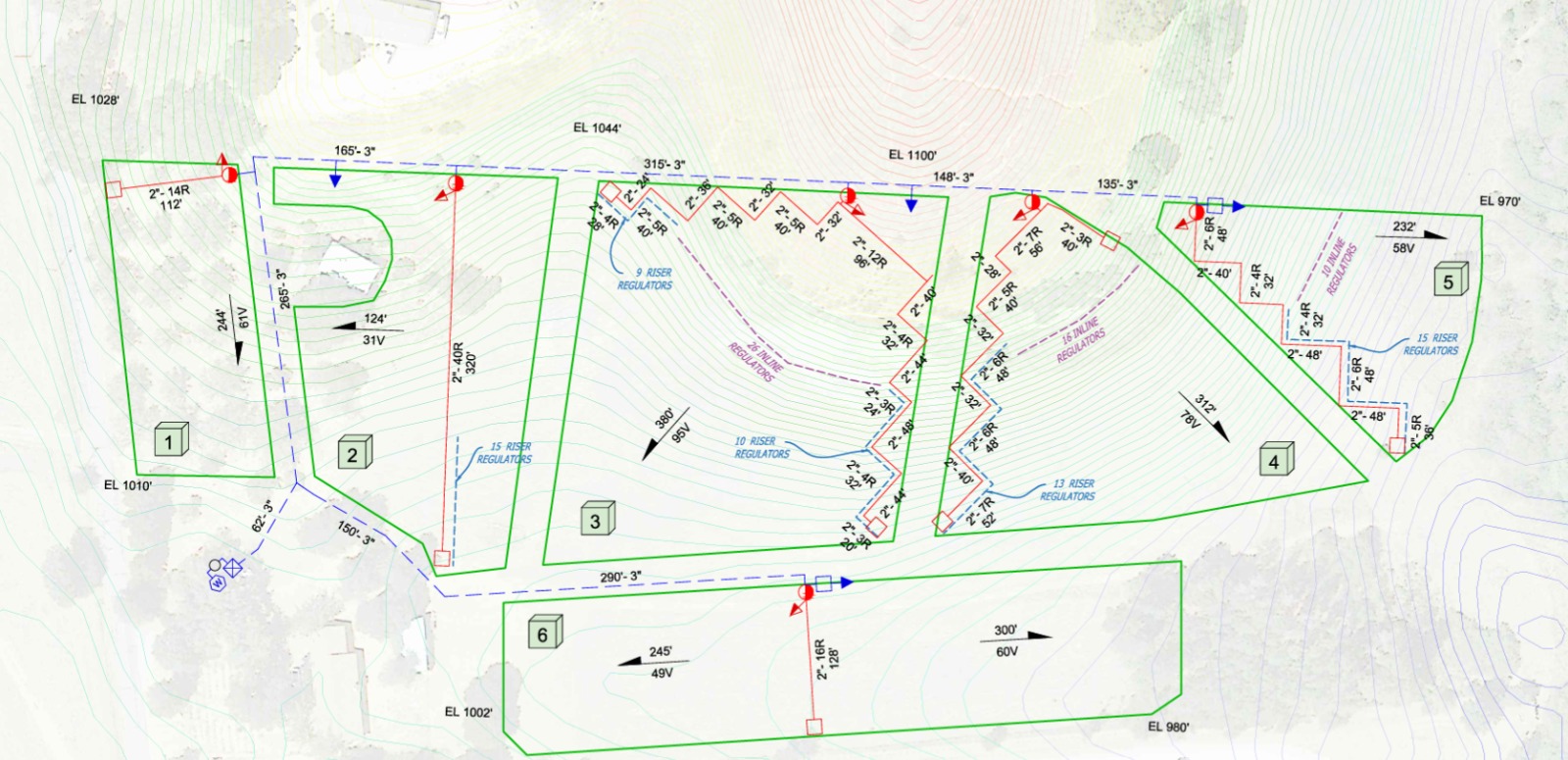
A closer look: irrigation and frost-protection plans
The irrigation plan maps the vineyard’s blocks and changing elevations.
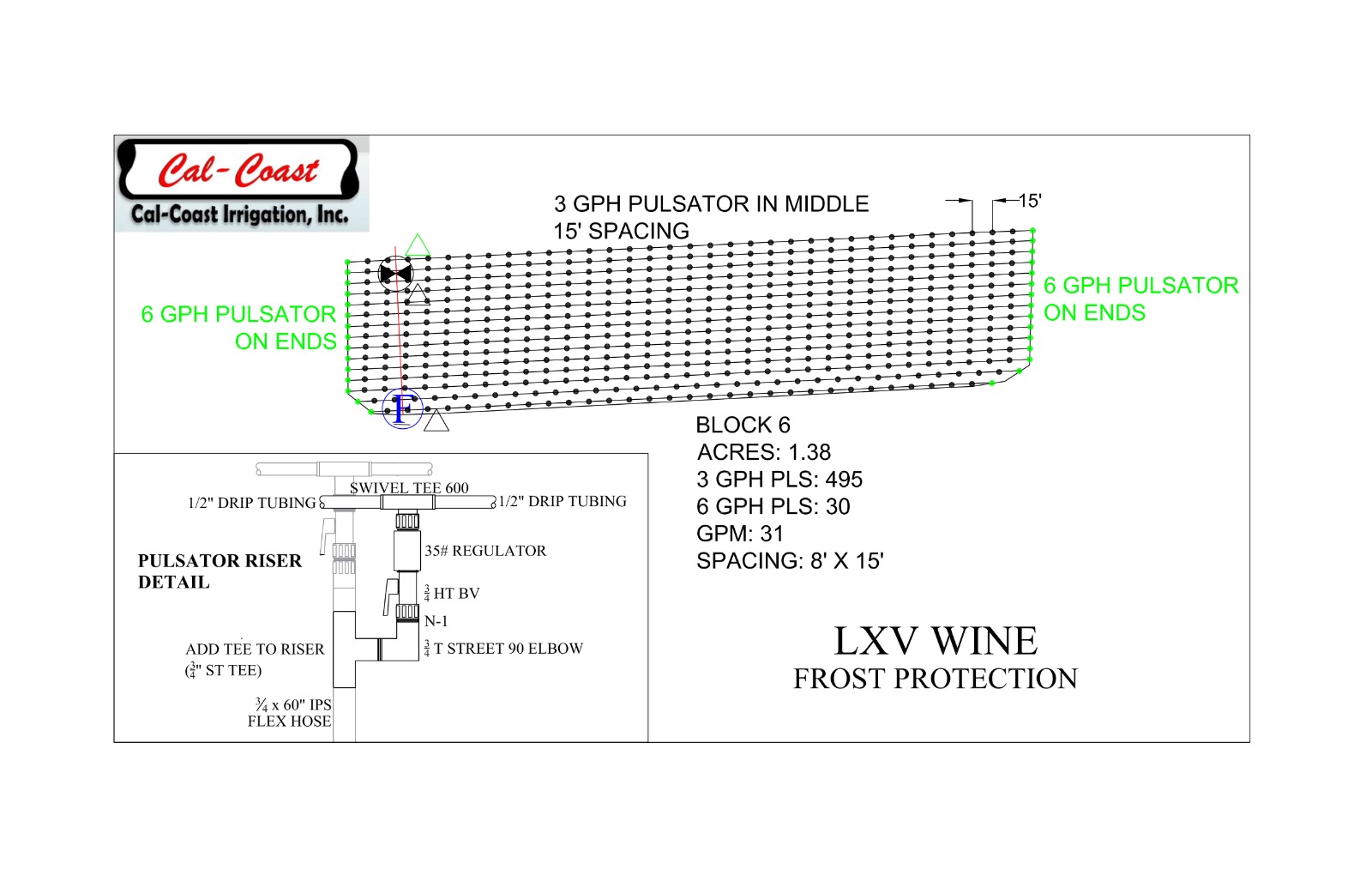
The Block 6 frost-protection design, including pulsator placement.
I am thankful for the many brilliant people I have had the chance to work with over the last twenty years who have shown me all the lessons that they have learned over the years. But I hope that if you ever are able to do a tasting with us at Armaa.N Estate, the one thing you leave remembering is our reverence and love for our vines.
From laying out the orientation of that vineyard, to the selection of the clonal material, through the harvest that we just completed (our fifth from that site), everything our team has done on that site has been a labor of love, sweat, and tears to set those vines up to be the best that they can be instead of purely inducing stress and making them struggle.
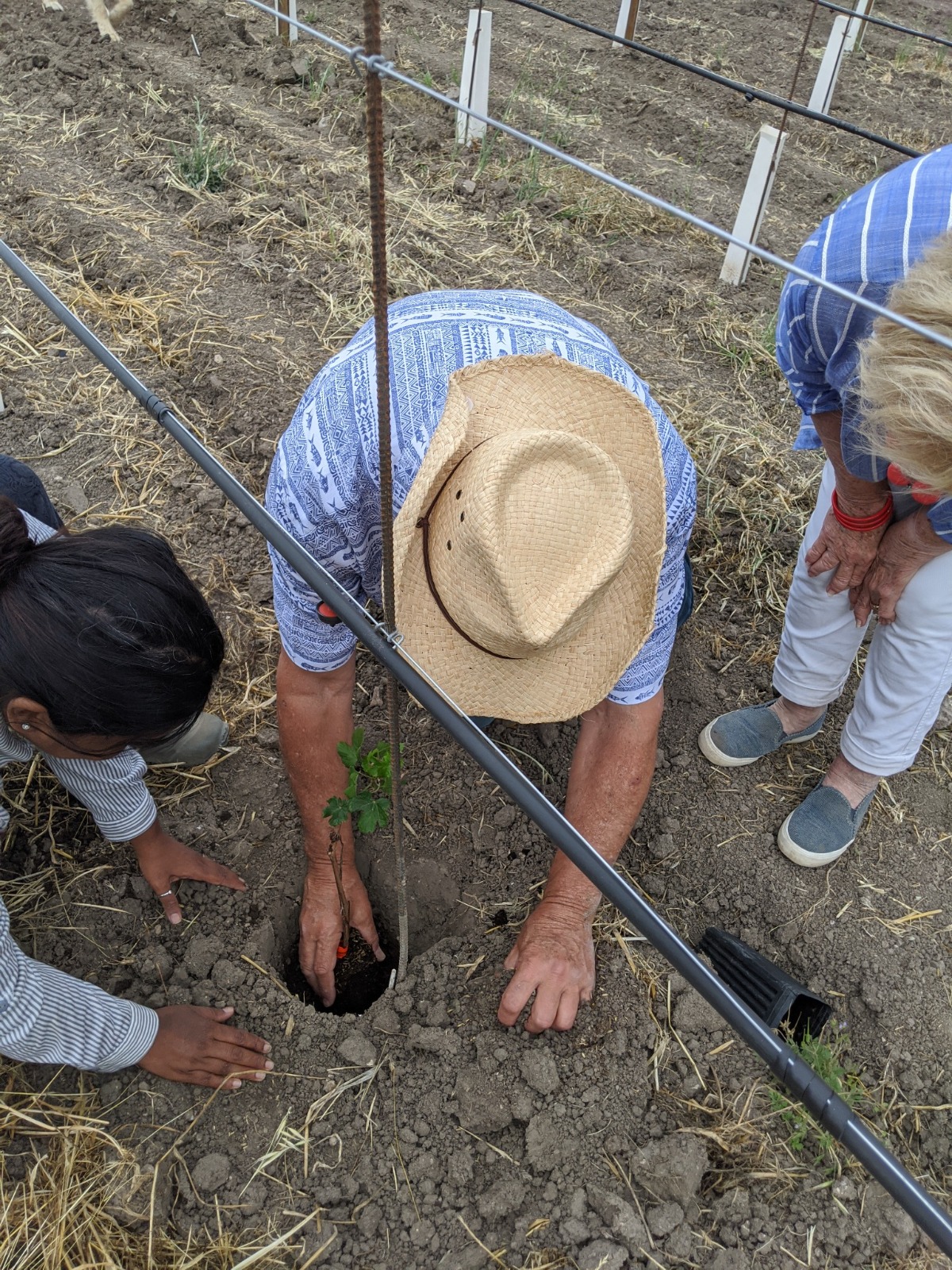
A young vine, planted with care at Armaa.N Estate.
I’m not saying that I go out and hug every individual vine (although I think Kunal might do that in the Cab Franc), but there is no place that I’m prouder to go out and stand and enjoy the moment, whether it’s a sub-freezing morning in the winter or a 105-degree day mid-heat wave. For us, Armaa.N Estate is the best place in the world!
From our cellar Welcome back
Pour one while you read
-
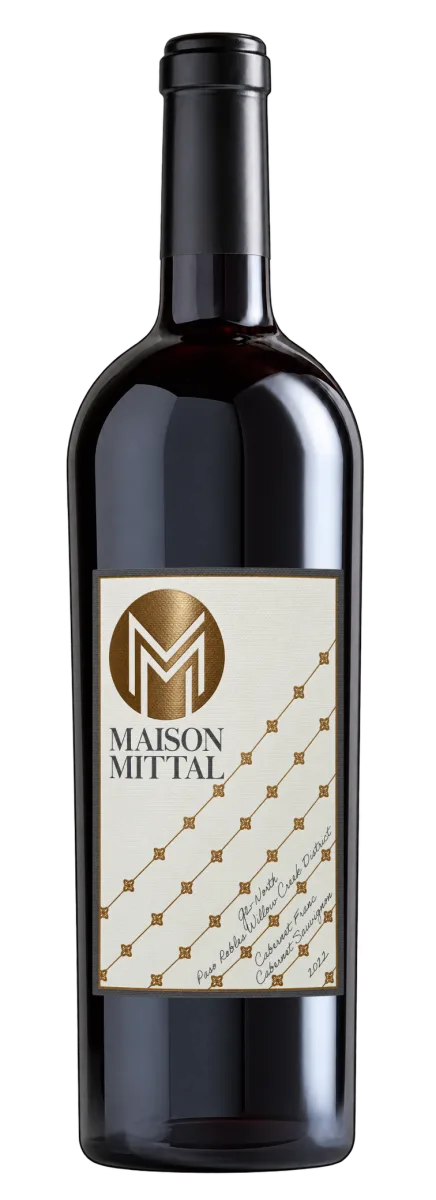
2022 Maison Mittal "G2-North" Cabernet Franc - Cabernet Sauvignon 97 Wine Enthusiast $150.00 Add to cart
Keep Reading
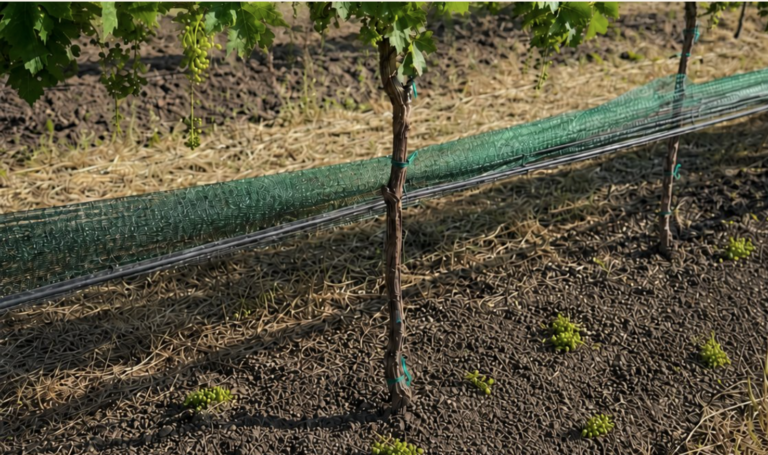
Crop Dropping at Armaa.N Vineyard
How many bottles does one vine make? Jeff Strekas does the math, and explains why we drop fruit.

Spring in Armaa.N vineyard
Bursts of color, the hum of bees, new buds everywhere. The vineyard is waking up.
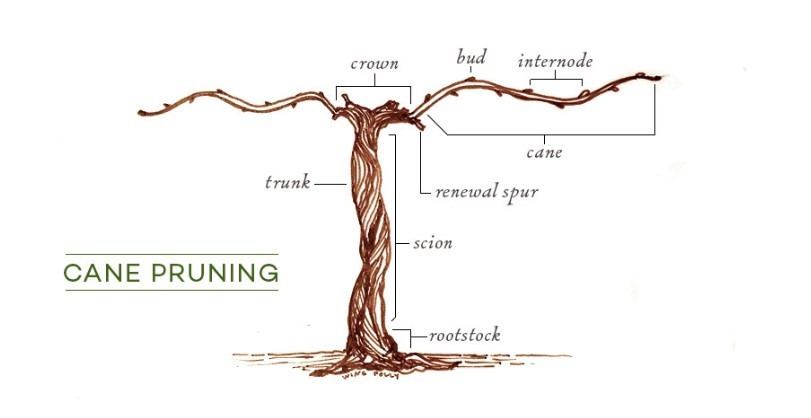
Pruning Armaa.N Vineyard after first crop
We sat down with Frederick Ammons to talk about how we prune Armaa.N now that it has given us its first crop.