
The Night I Learned Chicken Fried Steak Is Not Chicken
Wine teaches you humility. But I did not expect that lesson to arrive through chicken fried steak.
I was reviewing the recipe for Chicken Fried Steak we had sent to our club members. The ingredient list said: four beef cutlets.
Naturally, I panicked.
So I texted Rachel:
Me: Hi Rachel, real quick — the recipe for the chicken fried steak mentions four beef cutlets as the ingredient. Please correct and let me know
Rachel: Correct
Rachel: Is this the first time having chicken fried steak!?
Me: Ha ha … I've never had one. I just assumed it is chicken
Rachel: It's so fun with the spice blend!
Me: 25 years in this country — and I had no idea!
Rachel: Success on my end! Serving you something you've never had 🔥💞
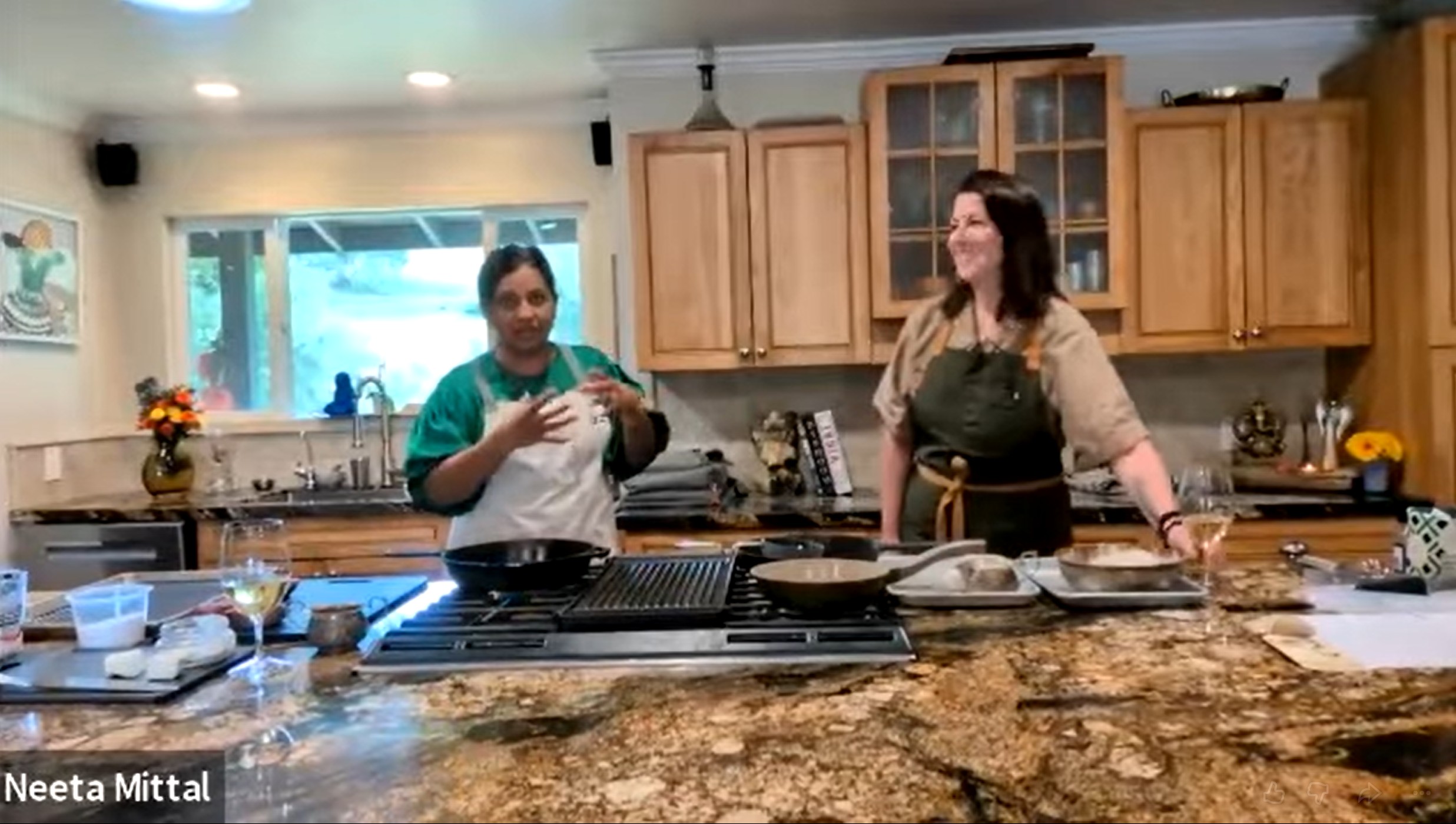
↳ Watch the full cooking session on YouTube
And that is how the evening began: with me discovering, very publicly, that chicken fried steak is, in fact, beef.
Twenty-five years in this country, and somehow I had missed this piece of American culinary knowledge. I thought it was chicken. A chicken steak. A filet of chicken. Something involving the bird.
It does not.
But that tiny misunderstanding became the perfect opening for the evening: food, wine, spice, curiosity, and the joy of learning something new at the table.
Chef Rachel has this gift.
She can take something familiar — a steak cutlet, flour, buttermilk, gravy, vanilla ice cream — and make it feel alive again. Not complicated. Not precious. Just alive.
That was the spirit of our first online cooking and pairing session with LXV club members. We wanted to create something for the people who do not always get to come to Paso Robles, sit in our tasting room, and experience the spring club shipment with us in person. So we brought the tasting room into their kitchens.
The wines were from the spring club shipment: our Sauvignon Blanc and The Jewel, our Sangiovese with Petit Verdot. Alongside them were two spice blends: Songs of Marrakech and Eternal Hearth.
These two blends are especially meaningful to us because they are part of something larger we have begun exploring through Sparkle, our ongoing research initiative with cancer warriors. Through Sparkle, we are studying how spices and flavor can help people reconnect with the joy of eating when treatment has changed the palate.
But around a stove, the question becomes very simple.
What can I make tonight?
What can I cook for myself?
What can I make for someone I love?
What can I serve friends without turning dinner into a performance?
Rachel understood that immediately.
She did not create recipes to impress people from a distance. She created recipes people could actually make. One for yourself. One for a date night. One for gathering around the table.
That is the direction we are moving toward with our club shipments — not just wine and spices, but usable rituals.
A way to bring LXV into real life.
We began with dessert, because of course Rachel would begin with dessert.
She warmed olive oil gently in a pan and added Songs of Marrakech. The spice blend began to bloom — sumac, orange peel, pink peppercorn, tamarind, fennel, cardamom, and a little heat from jalapeño. The kitchen changed immediately.
That word — bloom — became one of the quiet lessons of the evening.
When spices are dried, their flavor is waiting. Heat and fat bring them back. Not by burning them. Not by forcing them. By coaxing them open.
There was something beautiful about that.
A spice blend, sitting quietly in a tin, suddenly becoming fragrant in olive oil. A simple bowl of vanilla ice cream becoming a dessert you would remember. A white wine becoming not just something to sip, but something that made sense at the end of a meal.
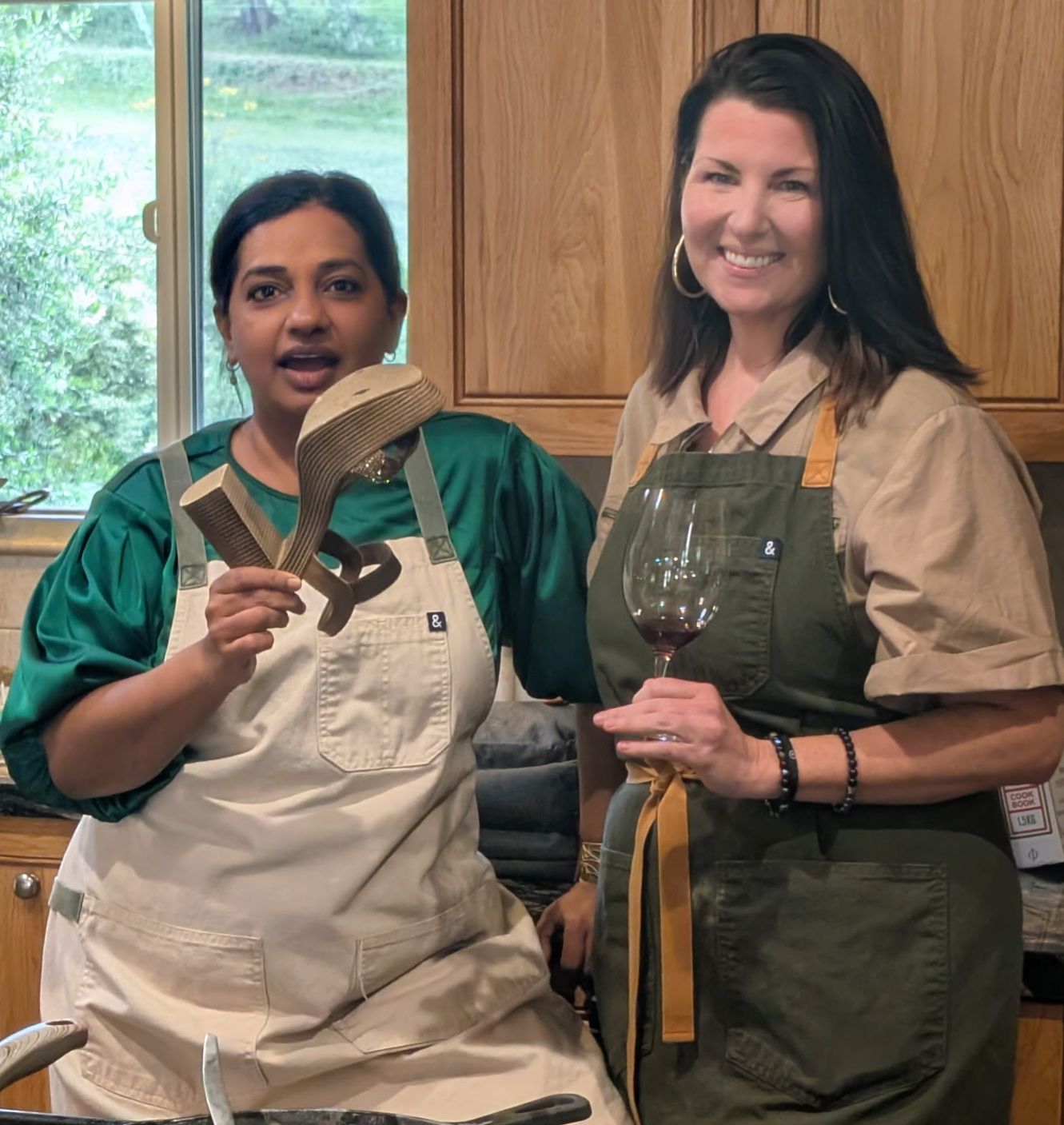
Then came the chicken fried steak.
Or, as I now know, the beef.
Rachel showed us how to pound the cutlets, how thick they should be, how the breading needs texture, how oil must be hot enough to crisp but not so hot that it burns. Club members cooked along from their homes, asking the questions people actually ask when they are cooking:
Is my oil hot enough? How much spice goes in the flour? Can I use a vegetarian patty? What if the gravy is too thick? Should the breading look like this?
This is what I love about cooking with people in real time. It is not polished. It is not perfect. Someone is looking for ice cream in the freezer. Someone's oil is too hot. Someone wants to know whether portobello mushrooms will work. Someone is halfway through a glass of Sauvignon Blanc.
And somehow, that is where the learning happens.
For the steak, Rachel used Eternal Hearth — a blend with nutritional yeast, coconut milk, tomato, gram flour, and warm savory notes. She folded it into the flour, then again into the gravy, and then, because she is Rachel, finished the plated dish with one more sprinkle.
When I tasted it, I understood the dish for the first time.
Not intellectually.
Physically.
The crisp breading. The richness of the gravy. The deep, savory comfort of the beef. And then the wine — The Jewel — came in with brightness, acidity, and lift.
That pairing taught the whole class something important.
A heavy dish does not always need a heavier wine. In fact, sometimes that is exactly what flattens everything.
The steak and gravy had weight. The wine had energy. The acidity cut through the richness. The cherry and savory notes echoed the dish without being swallowed by it. The spice did not take over. It acted as a bridge.
That is the word we kept coming back to.
At LXV, we are not creating spice blends to show off spices.
We are creating bridges for wine.
A good pairing should not make the wine disappear. It should not bend the wine into something else. It should make you want another bite, then another sip, then another bite again.
Rachel said it perfectly: her goal is never to overpower the wine or let the wine overpower the food. The goal is rhythm.
Bite. Sip. Bite. Sip.
That is when a pairing works.
By the time we returned to the dessert — vanilla ice cream with spice-bloomed olive oil, honey, and a little finishing salt — the evening had become exactly what I hoped it would be.
Not just a recipe demonstration.
Not just a wine tasting.
A shared table, even through a screen.
There was laughter. There were questions. There were small kitchen victories. There was my very public education in Southern food.
And there was that lovely message from Rachel afterward:
Rachel: Success on my end! Serving you something you've never had.
Yes.
Success indeed.
Because that is still what wine and food can do at their best.
They can make us feel experienced and new at the same time.
They can take something we thought we understood — steak, spice, ice cream, Sauvignon Blanc, Sangiovese — and show us another doorway in.
They can remind us that flavor is not just technique.
It is memory.
It is culture.
It is curiosity.
And sometimes, it is simply the joy of discovering that chicken fried steak has no chicken in it at all.
— Neeta Mittal, LXV Wine · Paso Robles
Keep Reading
Bordeaux Wine Trip & Saint-Émilion Guide | Neeta & Kunal’s LXV Story
For Kunal and me, Bordeaux has never been only a place to taste. It is friends, a cooperage fire, and Maison Mittal…

Kunal and I Are on Wine Enthusiast’s 2025 Future 40
An Indian couple, Bordeaux blends, Cabernet Franc and spice. The polite advice was to simplify.
Indian Food and Wine Pairing
Tap a dish, or spin by protein or wine, and the wheel tells you what to pour. Butter chicken, biryani, samosas, all…